

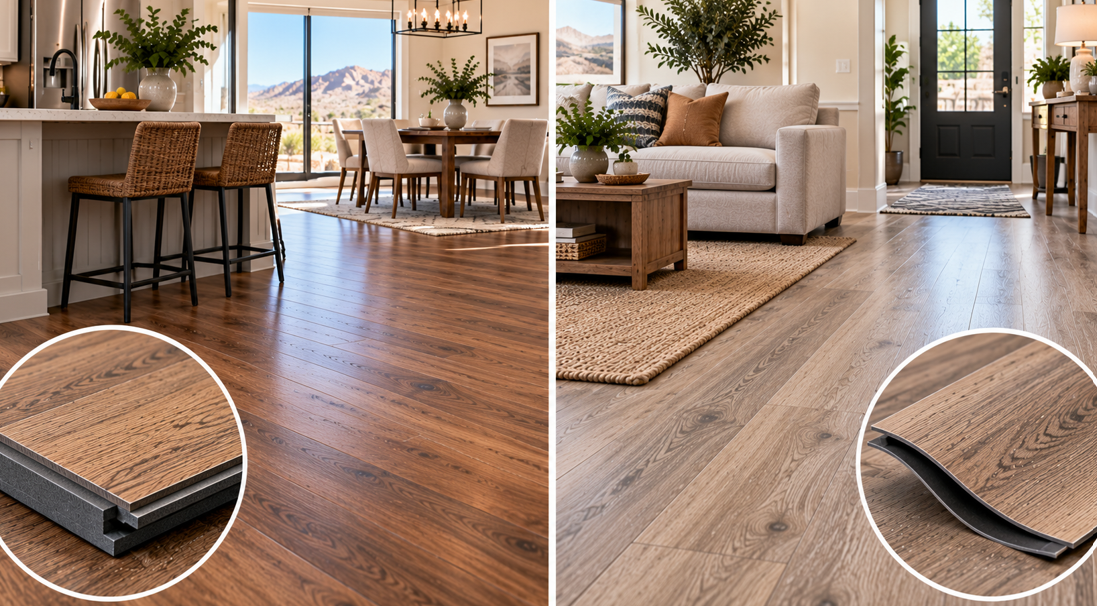
Luxury vinyl plank has become one of the most popular flooring choices for busy households, and for good reason. It is beautiful, durable and easy to clean. Once you start shopping, though, you will quickly notice two main categories: rigid core and flexible luxury vinyl. They look similar on the surface, but they are built differently and suit different spaces.
For homeowners in Victorville, the High Desert climate adds a few extra factors to consider. At Haus of Floor Decor, our family-owned team has helped homeowners compare flooring since 1997. This guide breaks down the differences so you can pick the right type for each room.
What Is Flexible Luxury Vinyl Plank?
Flexible luxury vinyl, sometimes called glue-down or dry-back vinyl, is a thinner plank made mostly of vinyl layers. It bends easily in your hands.
Strengths of Flexible Vinyl
Low profile: Its thin build works well where floor height matters, such as next to existing flooring or under doors.
Glue-down stability: When glued to the subfloor, it stays firmly in place and handles heavy rolling loads well.
Easy repairs: Individual planks can often be replaced without disturbing the whole floor.
Great for large spaces: Glue-down installation suits big open areas without the need for many expansion breaks.
Considerations for Flexible Vinyl
Because it is thin and pliable, flexible vinyl follows the shape of the subfloor below. Any bumps, dips or cracks may show through, so careful subfloor preparation is essential. It can also feel firmer underfoot than thicker products.
What Is Rigid Core Luxury Vinyl Plank?
Rigid core luxury vinyl has a stiff, dense core, typically stone plastic composite (SPC) or wood plastic composite (WPC). A design layer and wear layer sit on top, and many products include an attached underlayment.
Strengths of Rigid Core
Hides minor subfloor flaws: The stiff core bridges small imperfections better than flexible vinyl.
Click-lock installation: Planks lock together and float over the subfloor, which often makes installation faster.
Comfort and sound: Thicker planks and attached pads can feel softer and quieter underfoot.
Waterproof core: Most rigid core products are designed to handle spills and moisture from above.
Considerations for Rigid Core
As a floating floor, rigid core needs expansion space at walls and may need transition strips in very large rooms. It also sits a bit taller than flexible vinyl, which can affect door clearances.
How Victorville's Climate Affects the Choice
The High Desert brings hot, dry summers, cool nights and strong sun. Here is how those conditions relate to each type of vinyl.
Heat and Temperature Swings
All vinyl expands slightly with heat. Rigid core, especially SPC, is known for good dimensional stability, which helps it hold its shape in rooms that warm up during the day. Flexible glue-down vinyl stays anchored by adhesive, which also limits movement when installed correctly.
Strong Sun Through Windows
Large windows and sliding doors can heat a floor quickly. Direct sun can cause fading or movement in any vinyl, so window coverings or UV-filtering film are a smart addition in sunny rooms.
Desert Dust
Fine sand and dust act like sandpaper on any floor. Look for a thicker wear layer in entries and family rooms, and use mats at every exterior door.
Slab Foundations
Many Victorville homes are built on concrete slabs. Both types work over concrete, but rigid core is more forgiving of small slab imperfections, while flexible vinyl needs a smoother surface.
Which Type Fits Each Room?
Here are some helpful suggestions based on how rooms are typically used:
Living rooms and bedrooms: Rigid core offers comfort and quiet underfoot.
Kitchens: Rigid core resists spills and feels pleasant during long cooking sessions.
Bathrooms and laundry rooms: Both work well; rigid core's waterproof core is popular here.
Large open areas and rental properties: Flexible glue-down vinyl handles big spaces and is easy to repair plank by plank.
Rooms with tight door clearances: Flexible vinyl's low profile can be the better fit.
You can explore both styles in our luxury vinyl flooring collection.
Style Options for High Desert Homes
Both types come in a wide range of looks. Light oak and sandy neutrals keep rooms feeling cool and bright, while warm wood tones bring a cozy feel to bedrooms. Stone-look planks pair beautifully with desert landscaping visible through patio doors. Textured surfaces help hide dust and footprints between cleanings.
Installation and Care
The right installation is as important as the right product. Our master installers attend manufacturer and trade clinics and know how to prepare subfloors, leave proper expansion space and choose the correct adhesive or underlayment. Our dedicated measurer offers free in-home measurements, and at Haus of Floor Decor your installation is complete only when you say it is perfect.
To keep your floors beautiful:
Sweep or vacuum often to remove desert grit.
Clean with a damp microfiber mop and a vinyl-safe cleaner. We carry Bona cleaning and maintenance supplies.
Use felt pads under furniture and avoid dragging heavy items.
Keep blinds closed during the hottest part of the day in sun-facing rooms.
Cost and Value
Pricing depends on wear layer thickness, core type, plank size and design rather than on category alone. Rigid core can save on installation time, while flexible vinyl may cost less to repair over the years. We are happy to share affordable solutions with lasting value, and we offer financing to help bring your project to life.
Find the Right Vinyl for Your Victorville Home
Rigid core and flexible luxury vinyl plank each have clear strengths. Rigid core offers comfort, quick installation and forgiveness over imperfect subfloors, while flexible vinyl delivers a low profile, firm anchoring and easy repairs. The best choice depends on your rooms, your subfloor and how your household lives.
Visit our showroom at 41491 Big Bear Blvd in Big Bear Lake, call (909) 312-0066, or book a free in-home measurement. Contact our team and we will help you choose the right luxury vinyl plank for your home.


